
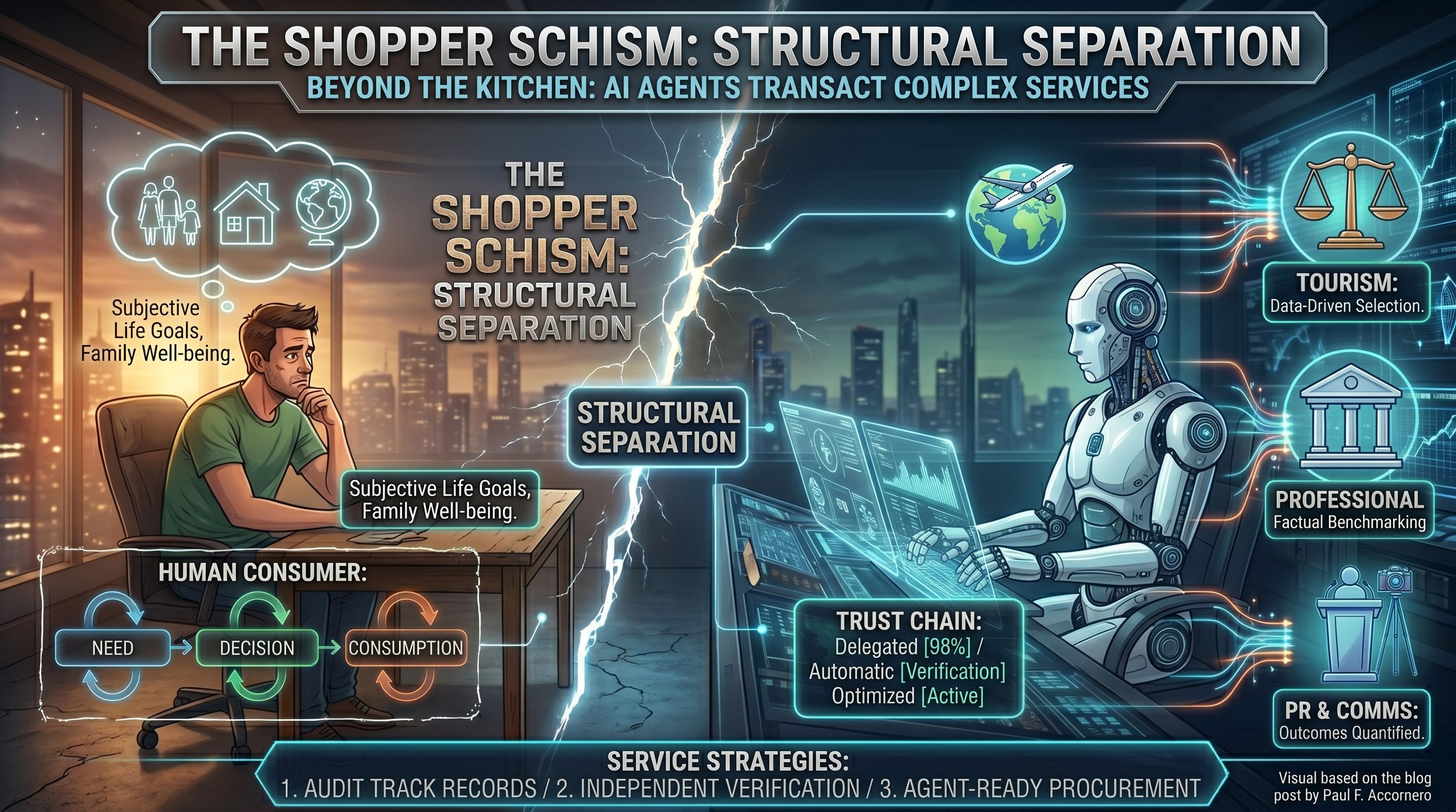
Beyond the Kitchen: Why the Shopper Schism Applies to Tourism, PR, and Professional Services
The Shopper Schism does not stop at consumer goods. Tourism, professional services, and PR are all sectors where AI agents will decompose selection criteria into structured, evaluable attributes. Paul Accornero examines how the structural separation of consumer and shopper reshapes service industries.
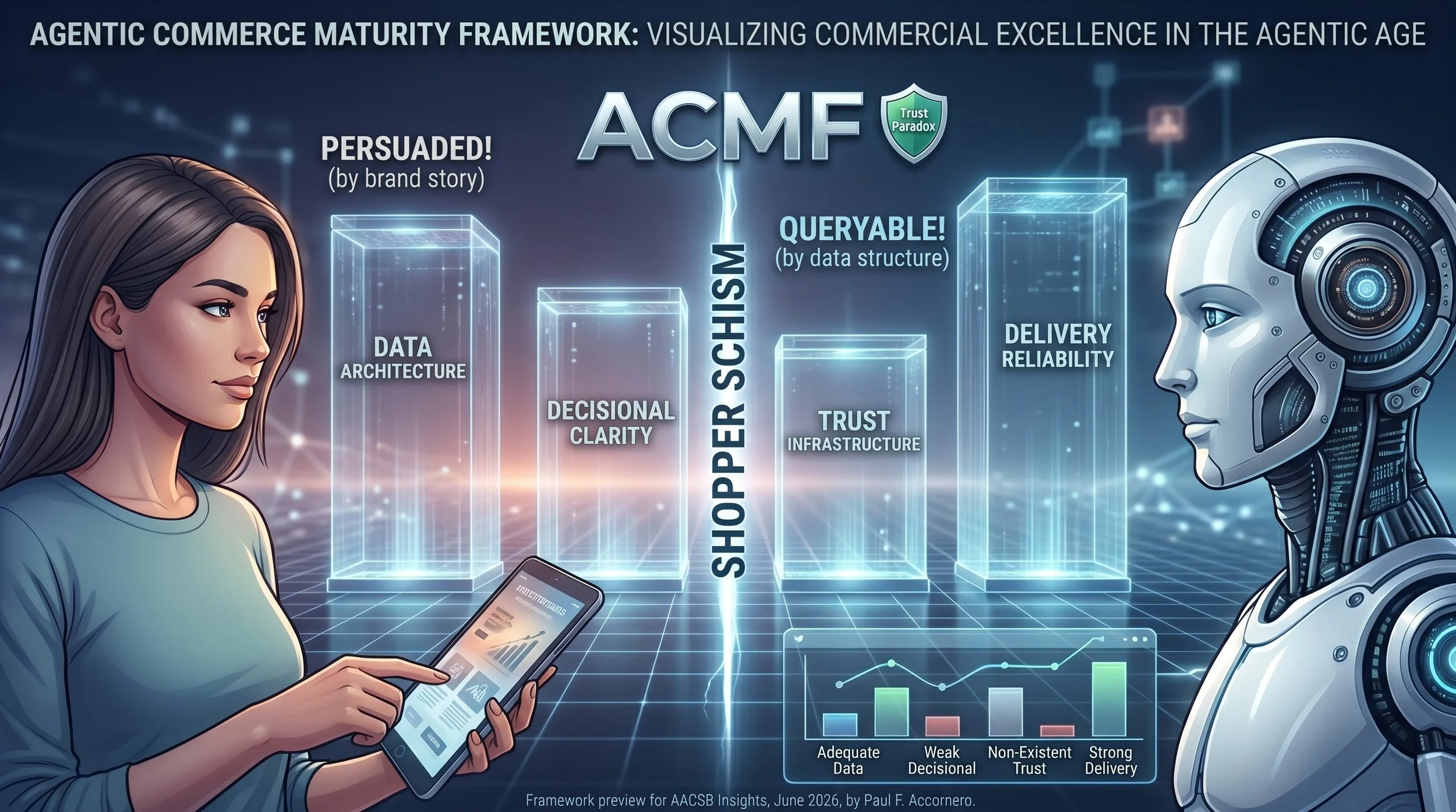
Commercial Excellence in the Agentic Age: A Preview of the AACSB Insights Framework
In June 2026, AACSB Insights will publish a framework I have been developing for two years. It addresses a question that most commercial organisations are not yet asking: what does commercial excellence look like when the buyer is not human?
The framework is the Agentic Commerce Maturity Framework, and it emerged from a specific frustration. Every diagnostic tool available to commercial leaders today assumes a human decision-maker at the centre of the purchase process.
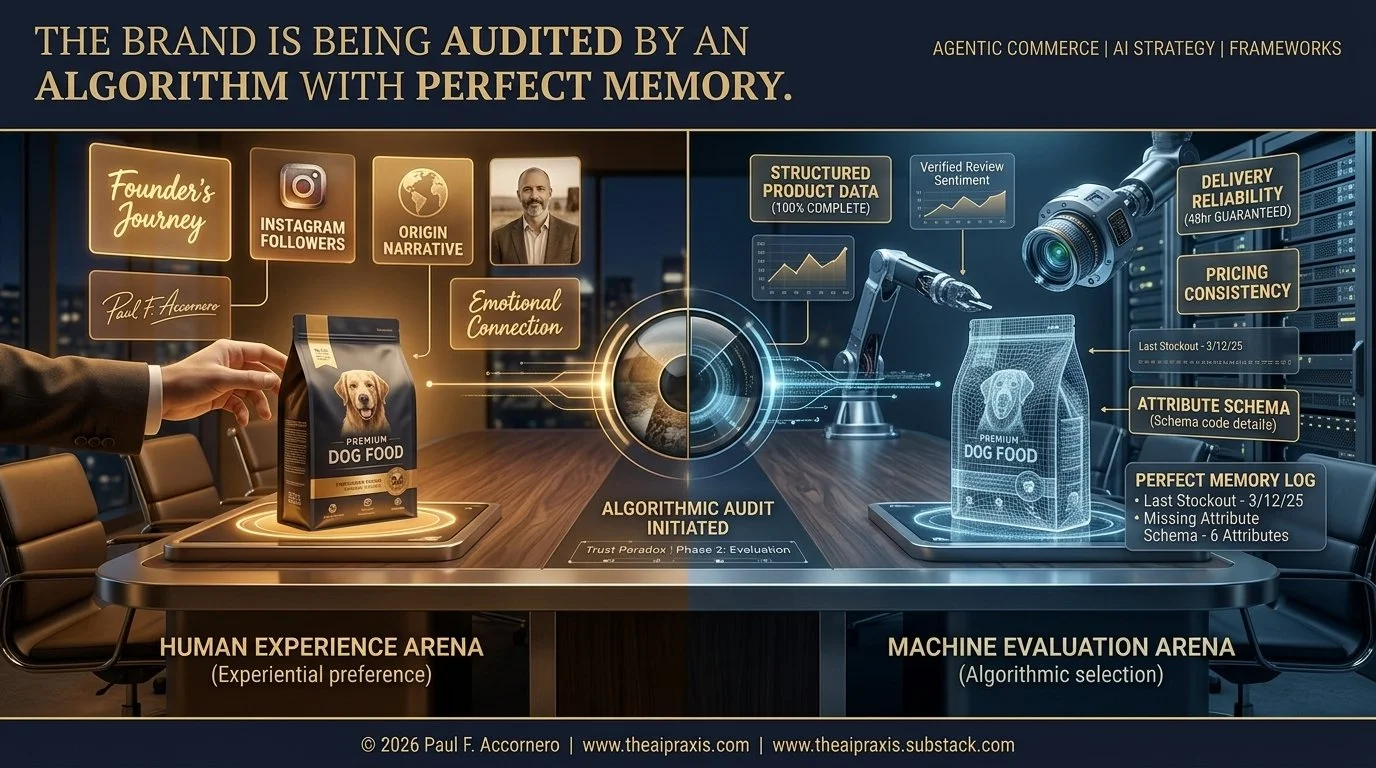
The Brand Is Not Dead. It Is Being Audited by an Algorithm with Perfect Memory.
AI shopping agents do not forget. They do not forgive. And they do not respond to brand storytelling. The Trust Paradox explains why brand trust migrates from consumer to algorithm in agent-mediated commerce. Brand trust, in the classical marketing literature, is a psychological construct. It lives in the consumer’s mind. It is built through repeated positive experiences, consistent messaging, emotional resonance, and social proof.
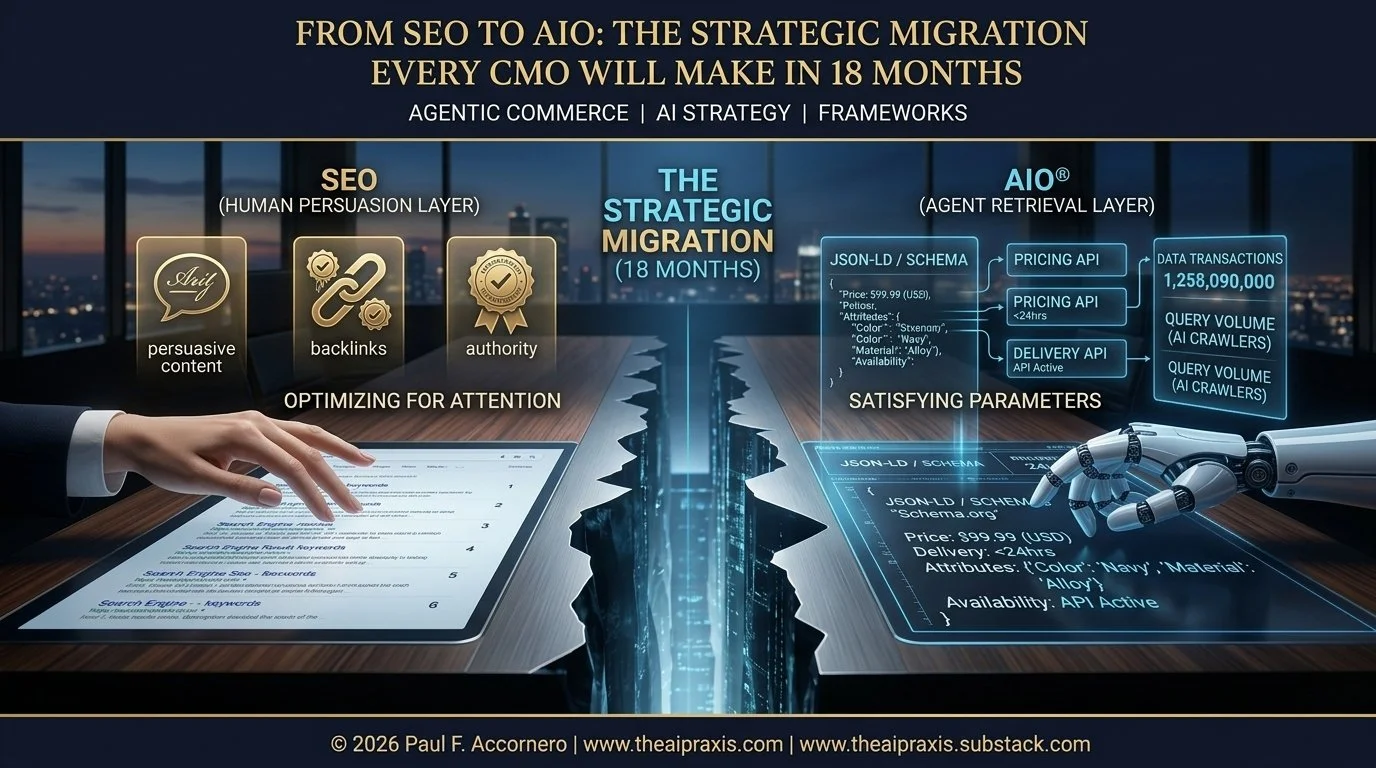
From SEO to AIO: The Strategic Migration Every CMO Will Make in 18 Months
SEO optimised for human attention. AIO optimises for machine evaluation. The migration from one to the other is not an upgrade; it is a reconstruction. Here is the structural argument and the roadmap. Every CMO in the Fortune 500 has an SEO strategy. Within 18 months, that strategy will be insufficient. Not inadequate. Not underperforming. Structurally insufficient, like optimising a telegram when the telephone has been invented.
This is not a prediction rooted in hype. It is a structural argument grounded in what AI agents actually do when they interact with commercial content. And what they do is fundamentally different from what human searchers do.
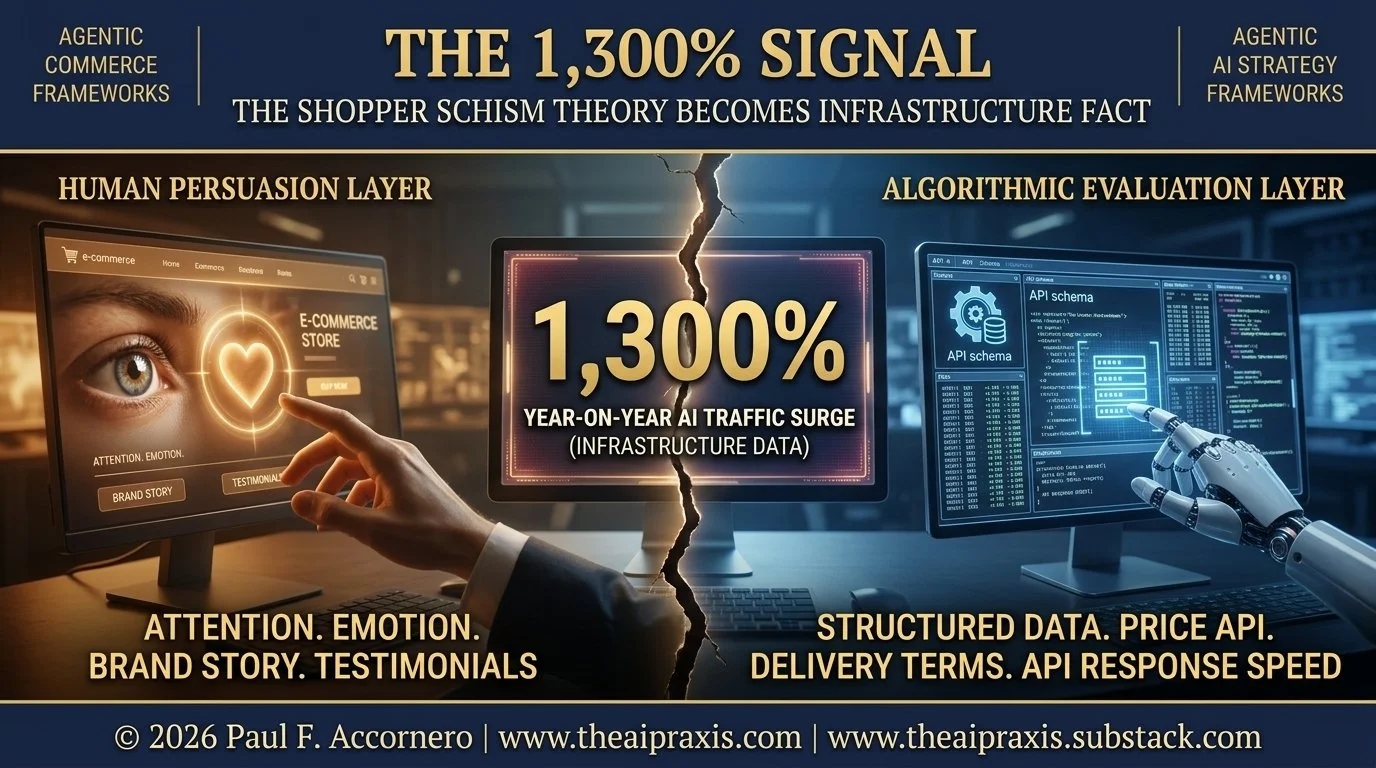
The 1,300% Signal: What ChannelEngine’s AI Traffic Surge Tells Us About the Shopper Schism
ChannelEngine reports a 1,300% surge in AI-agent traffic. Invisible launches an Agentic Commerce Adapter. Genstore ships AI-native storefronts. The Shopper Schism is no longer theoretical. It describes a structural separation: the permanent disaggregation of the human consumer who experiences a product from the algorithmic agent that increasingly selects, evaluates, and purchases it.
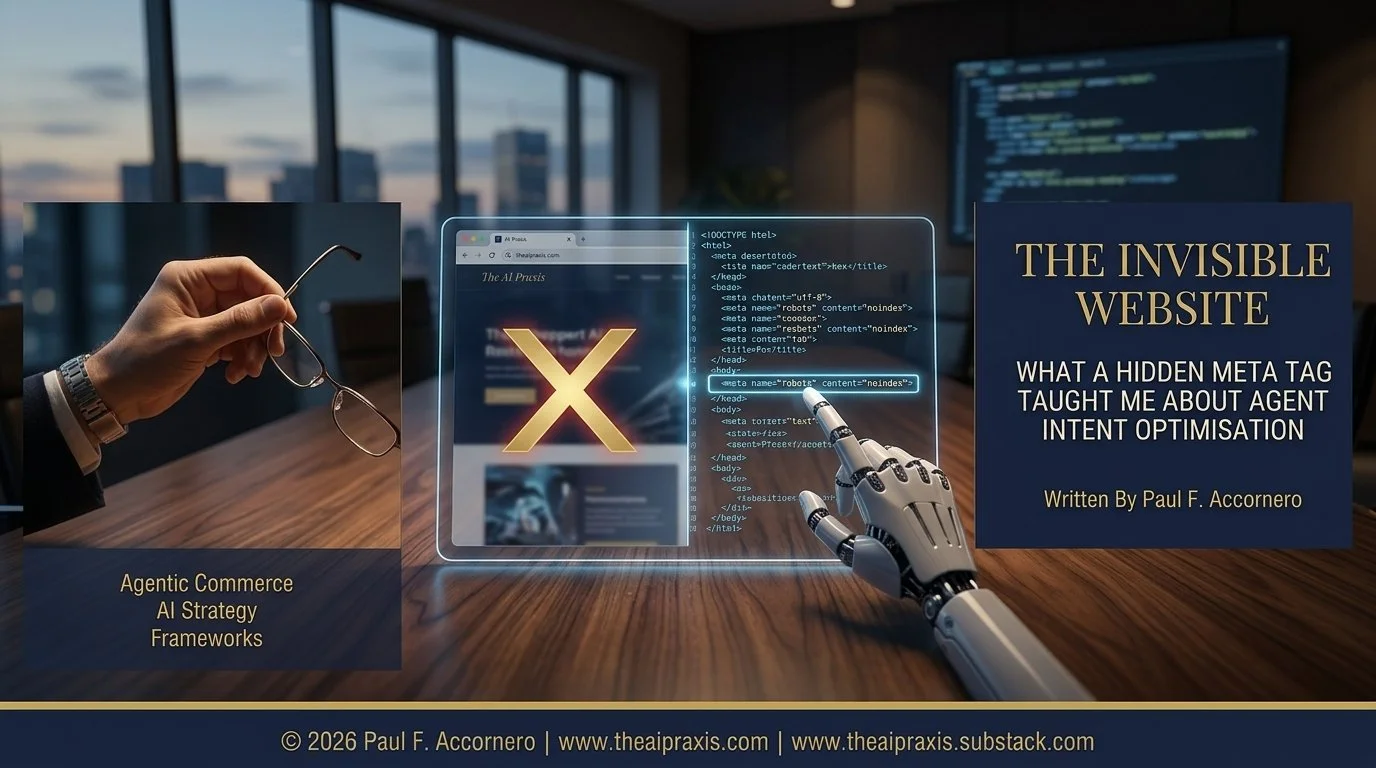
The Invisible Website: What a Hidden Meta Tag Taught Me About Agent Intent Optimisation
A hidden noindex meta tag rendered theaipraxis.com invisible for two months. The lesson is not about SEO. It is about why Agent Intent Optimisation demands a fundamentally different infrastructure posture.
Not in the way that a restaurant closes for renovations or a shop locks its doors overnight. It existed physically; the pages loaded, the text rendered, the frameworks sat there waiting for readers. But to every search engine on the planet, and to every AI agent crawling the web for information about agentic commerce, theaipraxis.com was a blank wall. Invisible. Silent. Gone. The culprit was a single line of code: <meta name="robots" content="noindex">.