
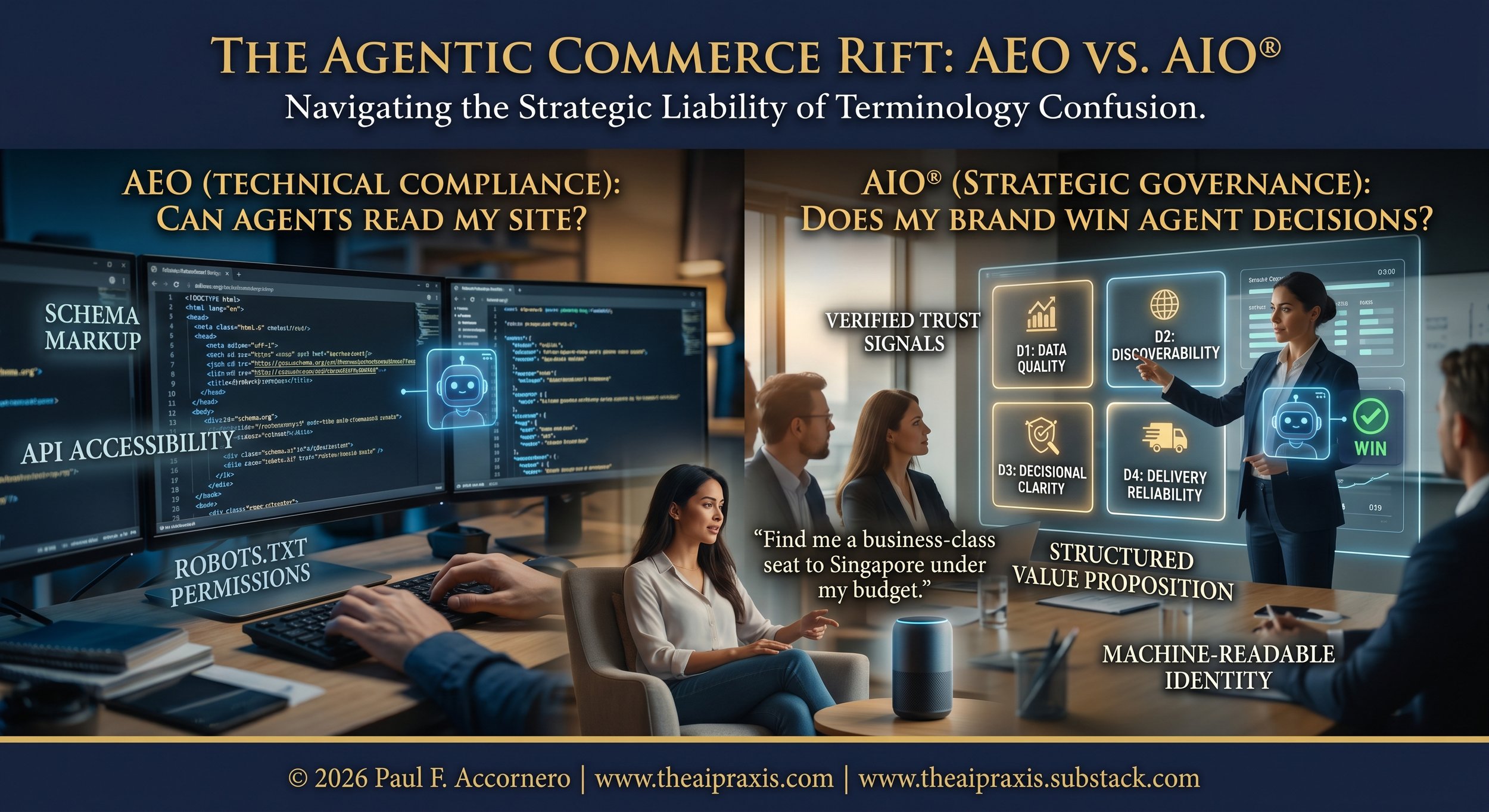
AIO vs AEO: Why the Framework You Choose Will Define Your Brand's Algorithmic Future
Picture a consumer in 2026. She does not open Amazon. She does not type a search query. She asks her AI agent to reorder her household staples.
What determined the outcome? Not your packaging. Not your ad creative. Not even your price, in the way you have historically managed it. What determined the outcome was the information your brand made available to that agent, the trust signals it could verify, and the structured data it could parse in milliseconds.
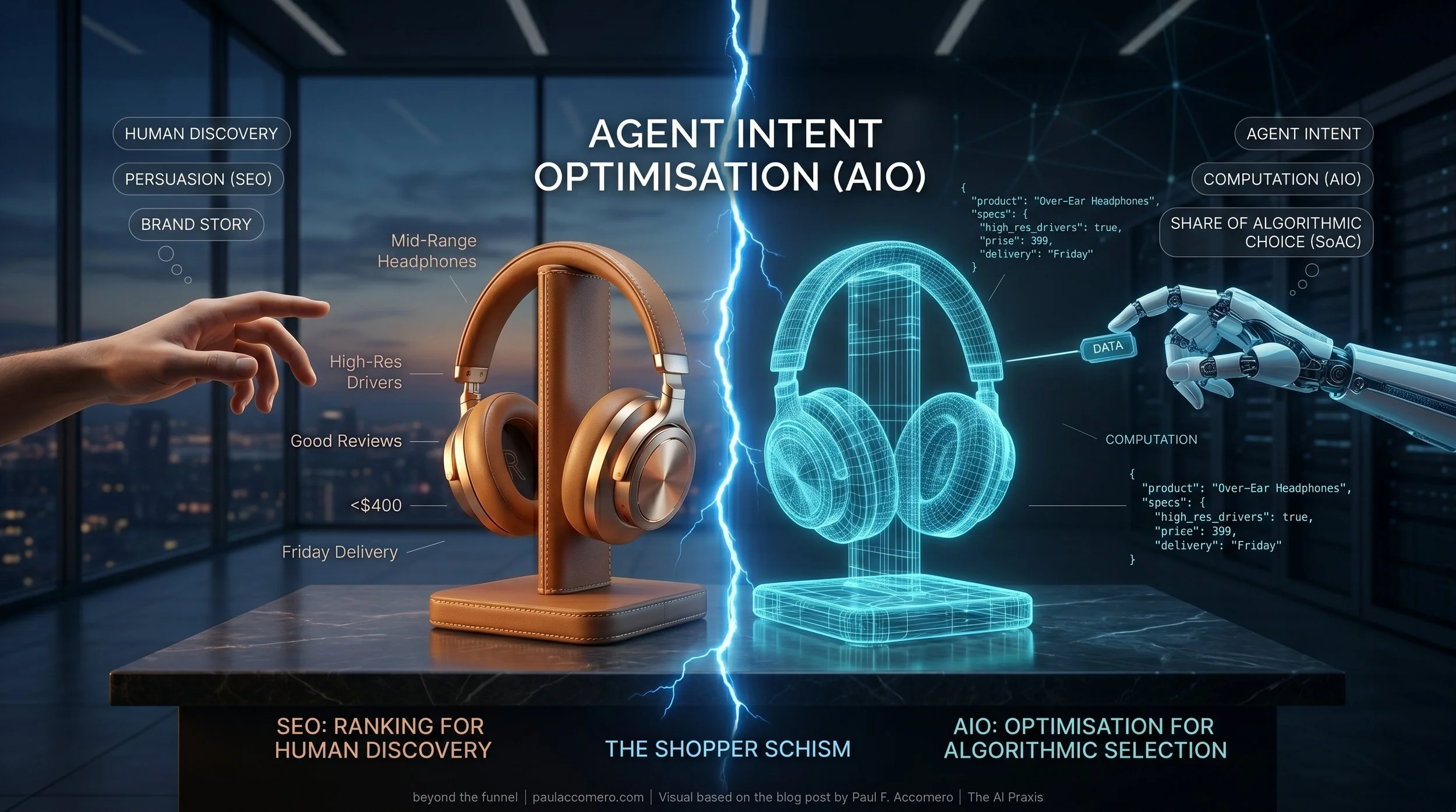
What Is Agent Intent Optimization (AIO)? The Discipline That Replaces SEO in the Agentic Commerce Era
AIO stands for Agent Intent Optimisation, the marketing discipline of optimizing products, services, content and commercial infrastructure for AI agents rather than human consumers. I coined the phrase in 2025 and published as a foundational paper on SSRN (ID: 5511758)
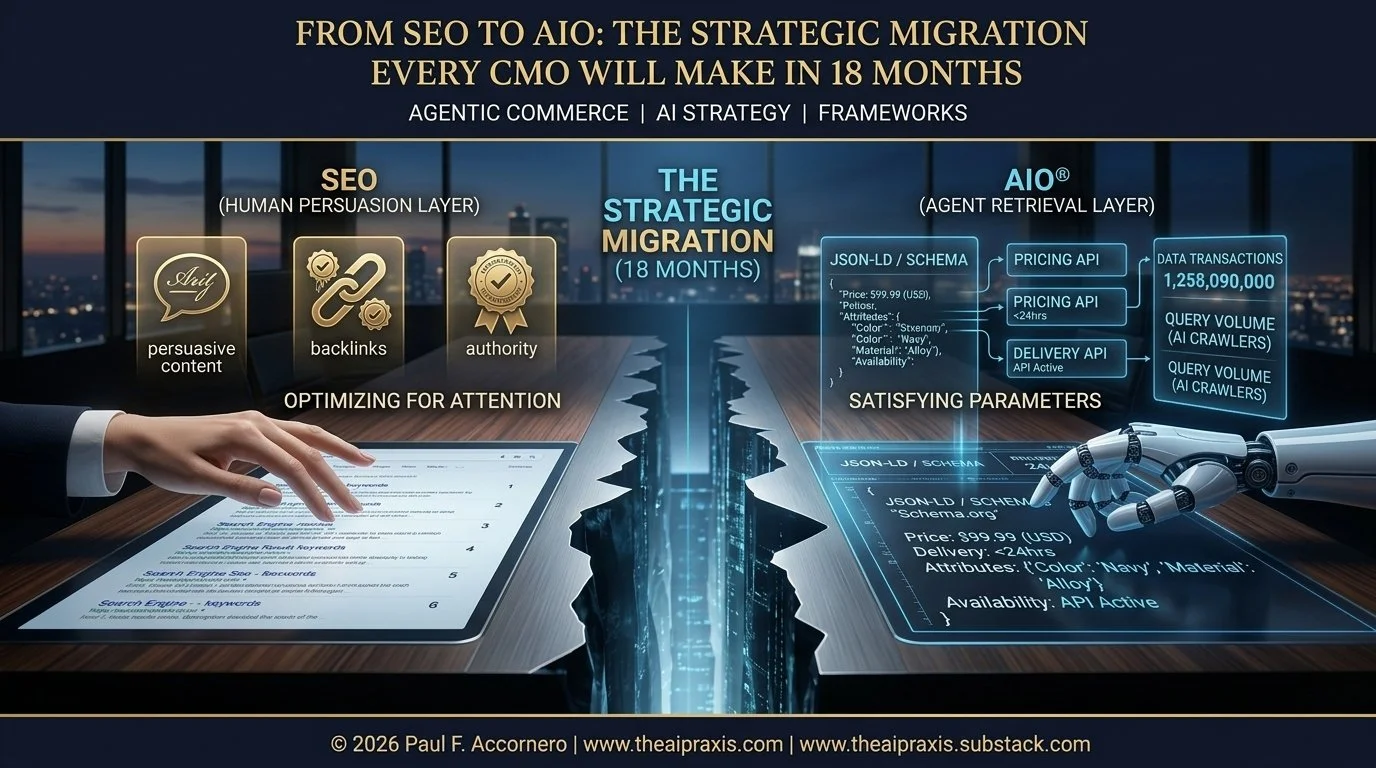
From SEO to AIO: The Strategic Migration Every CMO Will Make in 18 Months
SEO optimised for human attention. AIO optimises for machine evaluation. The migration from one to the other is not an upgrade; it is a reconstruction. Here is the structural argument and the roadmap. Every CMO in the Fortune 500 has an SEO strategy. Within 18 months, that strategy will be insufficient. Not inadequate. Not underperforming. Structurally insufficient, like optimising a telegram when the telephone has been invented.
This is not a prediction rooted in hype. It is a structural argument grounded in what AI agents actually do when they interact with commercial content. And what they do is fundamentally different from what human searchers do.
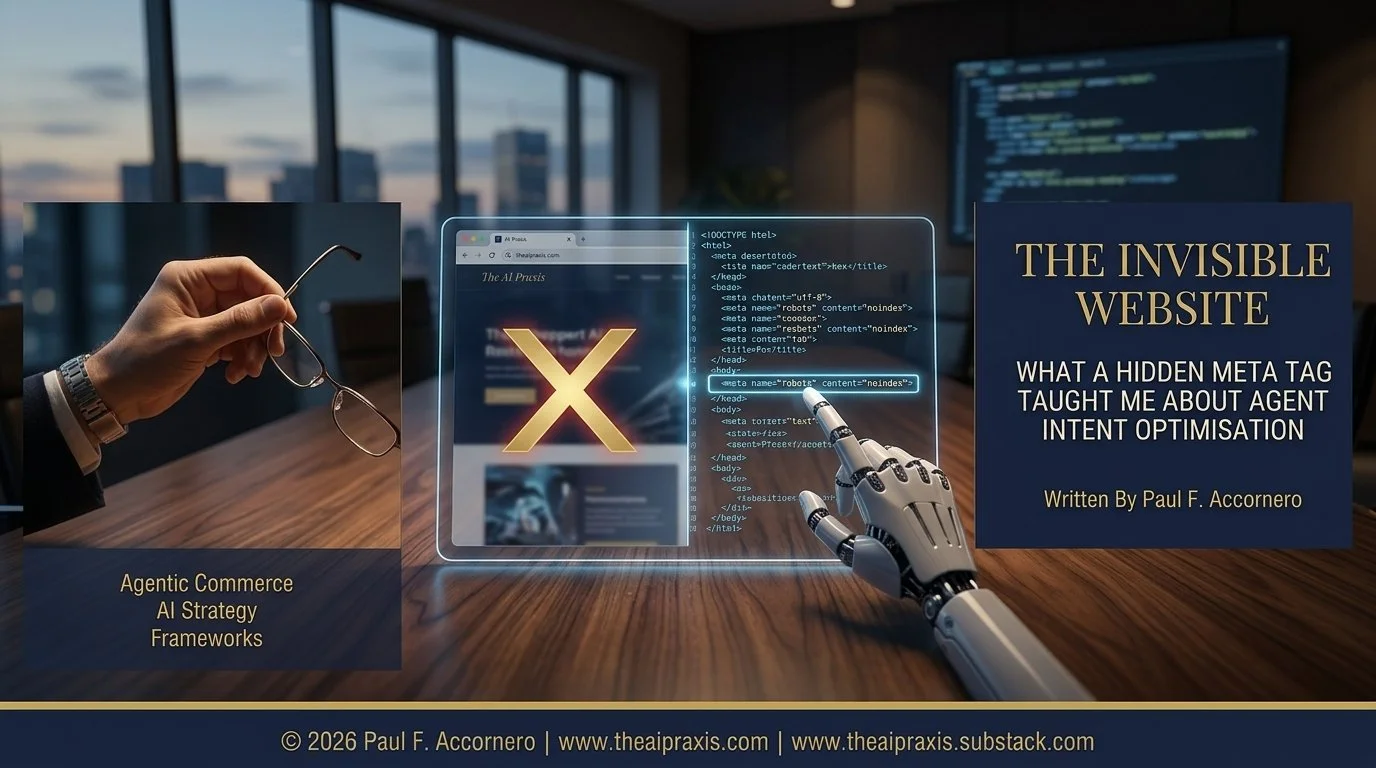
The Invisible Website: What a Hidden Meta Tag Taught Me About Agent Intent Optimisation
A hidden noindex meta tag rendered theaipraxis.com invisible for two months. The lesson is not about SEO. It is about why Agent Intent Optimisation demands a fundamentally different infrastructure posture.
Not in the way that a restaurant closes for renovations or a shop locks its doors overnight. It existed physically; the pages loaded, the text rendered, the frameworks sat there waiting for readers. But to every search engine on the planet, and to every AI agent crawling the web for information about agentic commerce, theaipraxis.com was a blank wall. Invisible. Silent. Gone. The culprit was a single line of code: <meta name="robots" content="noindex">.

Algorithmic Readiness in the Age of Agent Reputation: Five Questions Every Commercial Leader Must Answer
1.5M+ claimed agents. Reddit-like format. Explain “molts,” “submolts,” the lobster metaphor, OpenClaw/Moltbot origins. Then the critical lens: The Economist’s “humdrum explanation” — agents may simply be mimicking social media patterns from training data. MIT Technology Review’s “AI theater” framing.

Google’s Universal Commerce Protocol: An Analysis Through the Lens of Agentic Commerce Theory
Agentic commerce is the paradigm of commercial exchange in which autonomous AI systems, operating on delegated authority from human principals, assume the shopper function - executing search, evaluation, and purchase decisions through computational logic rather than psychological influence.